When someone dies, their absence is keenly felt by those who care about them. The scholarly understanding of grief has shifted to recognize that a relationship shifts, rather than ends, when a person dies.
People are often rendered mute by grief and tattoos “allow access to expression without need of words” (Warnick & Toye, 2016, p.134). The act of choosing and getting a memorial tattoo can be therapeutic in that it is a connection to the person who died.
Inking the Bond has defined memorial tattoo as one that is obtained to honour a person who has died. This excludes other kinds of commemorative tattoos such as memorials to pets, those that honour someone living, or those marking a passage in life. Memorial tattoos depict the relationship with the deceased on the outside, on the skin. In effect, they are inking the bond with the person who has died.
Interviews took place in Southern Ontario and in collaboration with Bereaved Families of Ontario. The repository has created a community of practice (Baljko, 2016) to bridge community and academe by including tattoo artists, those seeking tattoos, and those working with grievers. Further, it provided a research resource for social scientists interested in death, dying and bereavement.
This project has deepened our understanding of the social dimensions of meaning making within the grief experience.
Every tattoo tells a story… see our gallery

M reminds herself to breathe because that was a problem for her mother at the end of her life. When asked if her mother would like the tattoo, M responded: “I honour my mother through dishonouring her.” 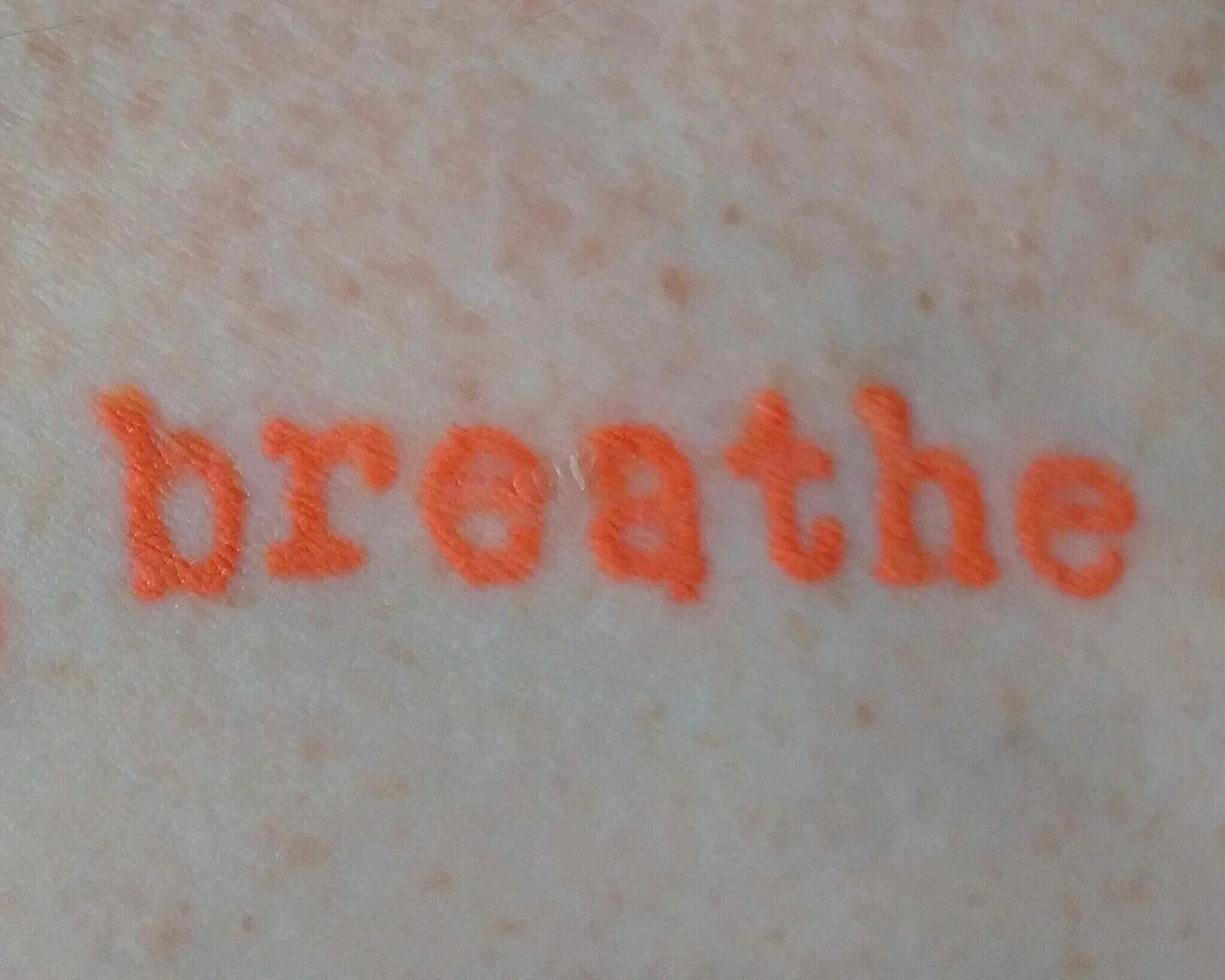
M’s father often brought home roses for M and her mother. When picking the image for her tattoo, M chose a rose to honour that connection. 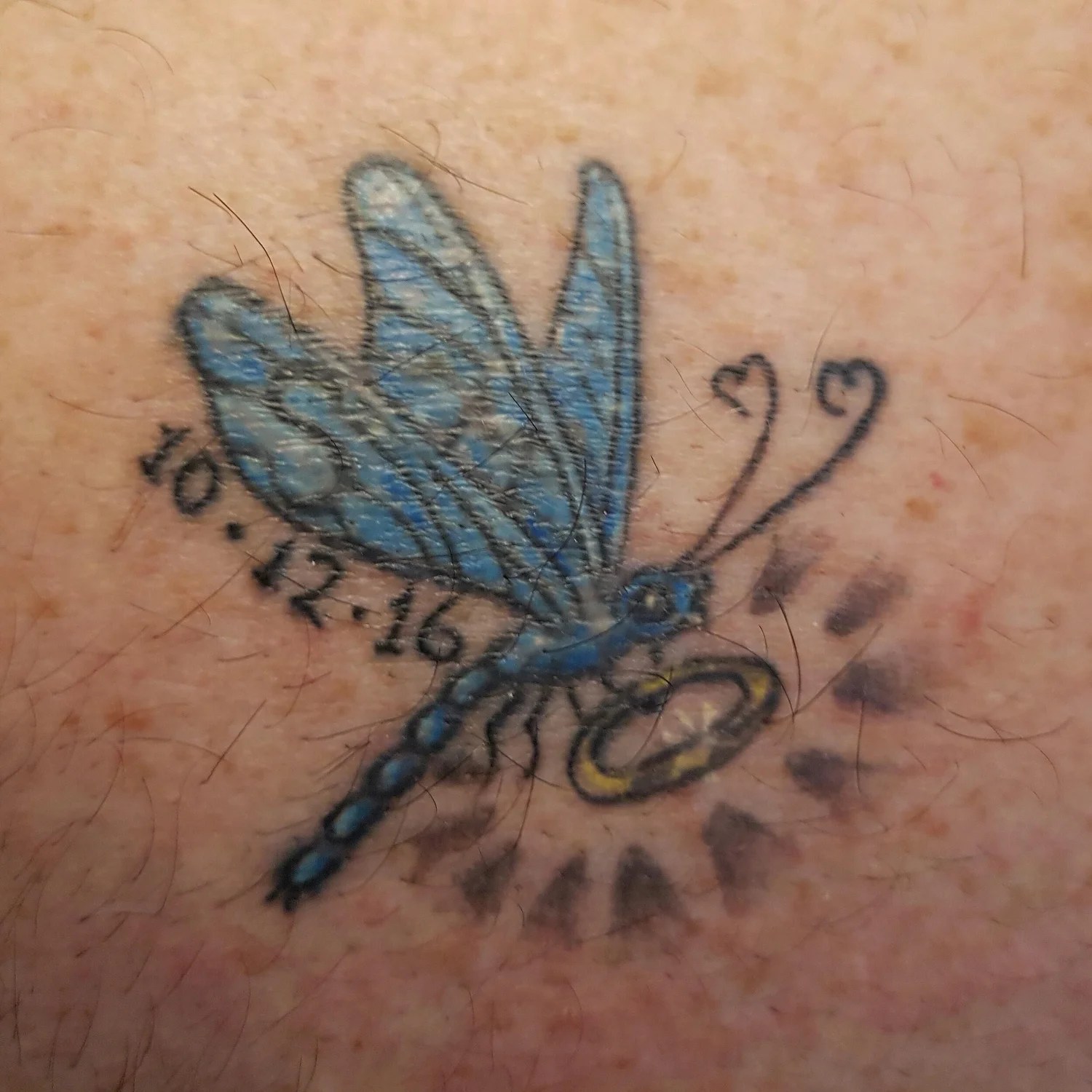
After his wife died, D had a dragonfly carrying a halo tattooed on his shoulder so that his wife is, as he says, “on my shoulder everywhere I go.” 
This tattoo was not meant to be a memorial tattoo. D had this design tattooed on his arm and made into a piece of jewellery for his wife when she was undergoing cancer treatment. It was only after she died that he considered it a memorial tattoo. 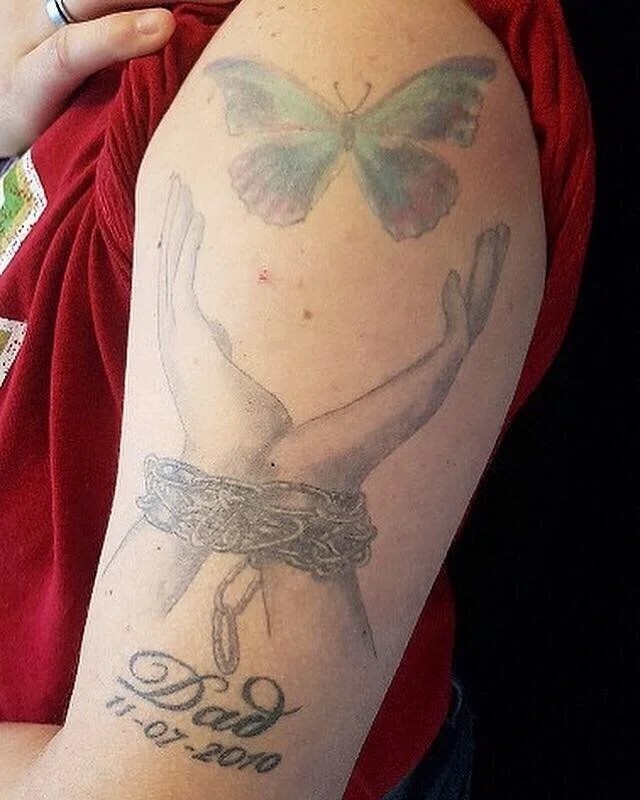
Sometimes, a memorial tattoo is a testament for transformation. When J saw this image, she knew it was the one to represent her conflicted relationship with her father. 
Sometimes the idea of memorial tattoos comes from unexpected places. “…she was a younger funeral director. Probably, like, my age, and a woman, and she said, ‘You know some families now are choosing to do tattoos with the fingerprints of their loved ones’.” 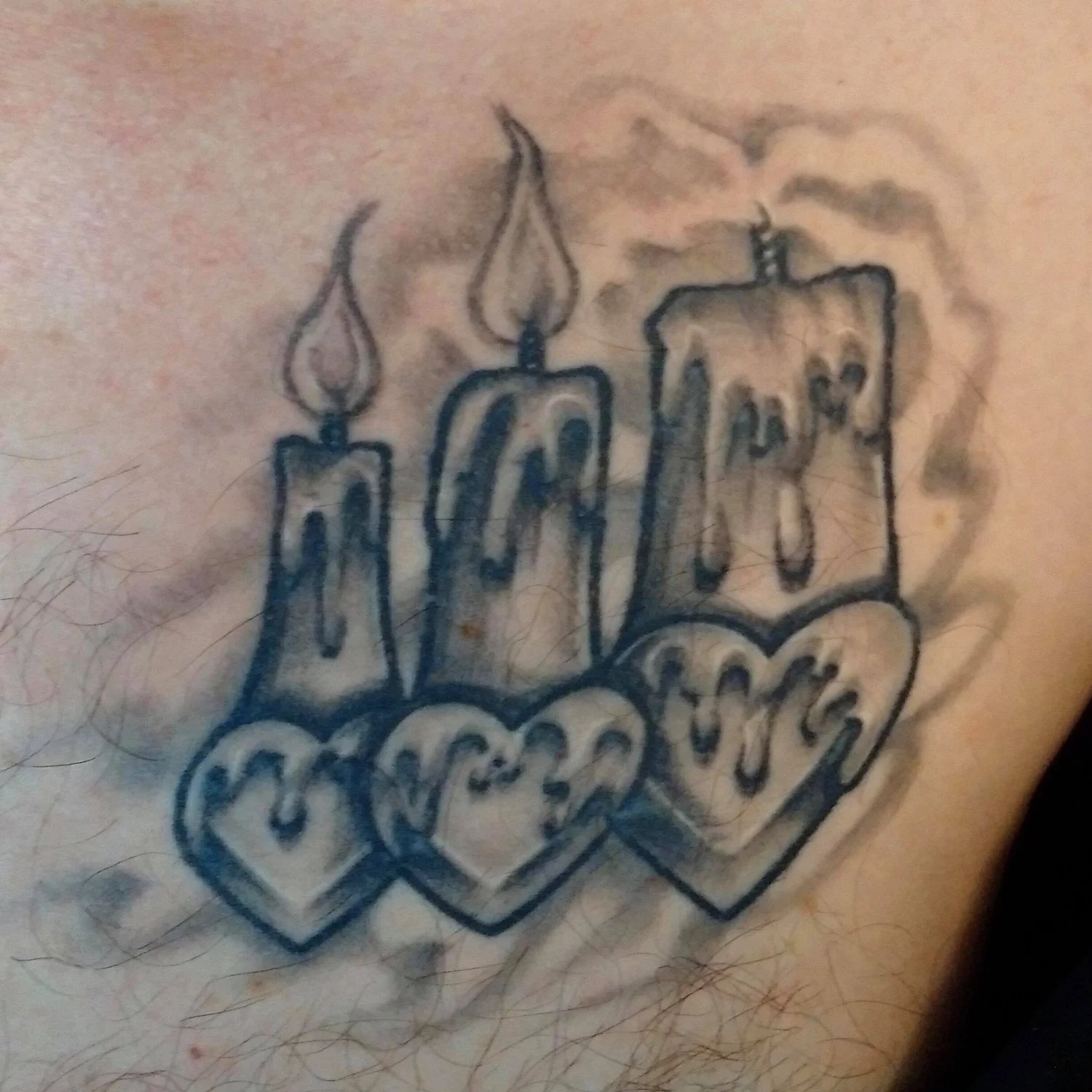
According to C, his son’s future was snuffed out when he died by suicide. The image that came to him was three candles, one representing the past, then the present, then the future. “I woke up one night, and not even consciously, I drew a picture… three candles, with hearts at the base. One for the little boy, one for the man he’d become, and then, the future at play. So two candles are lit. And one’s been snuffed out; it’s got the trail of smoke coming off it.” 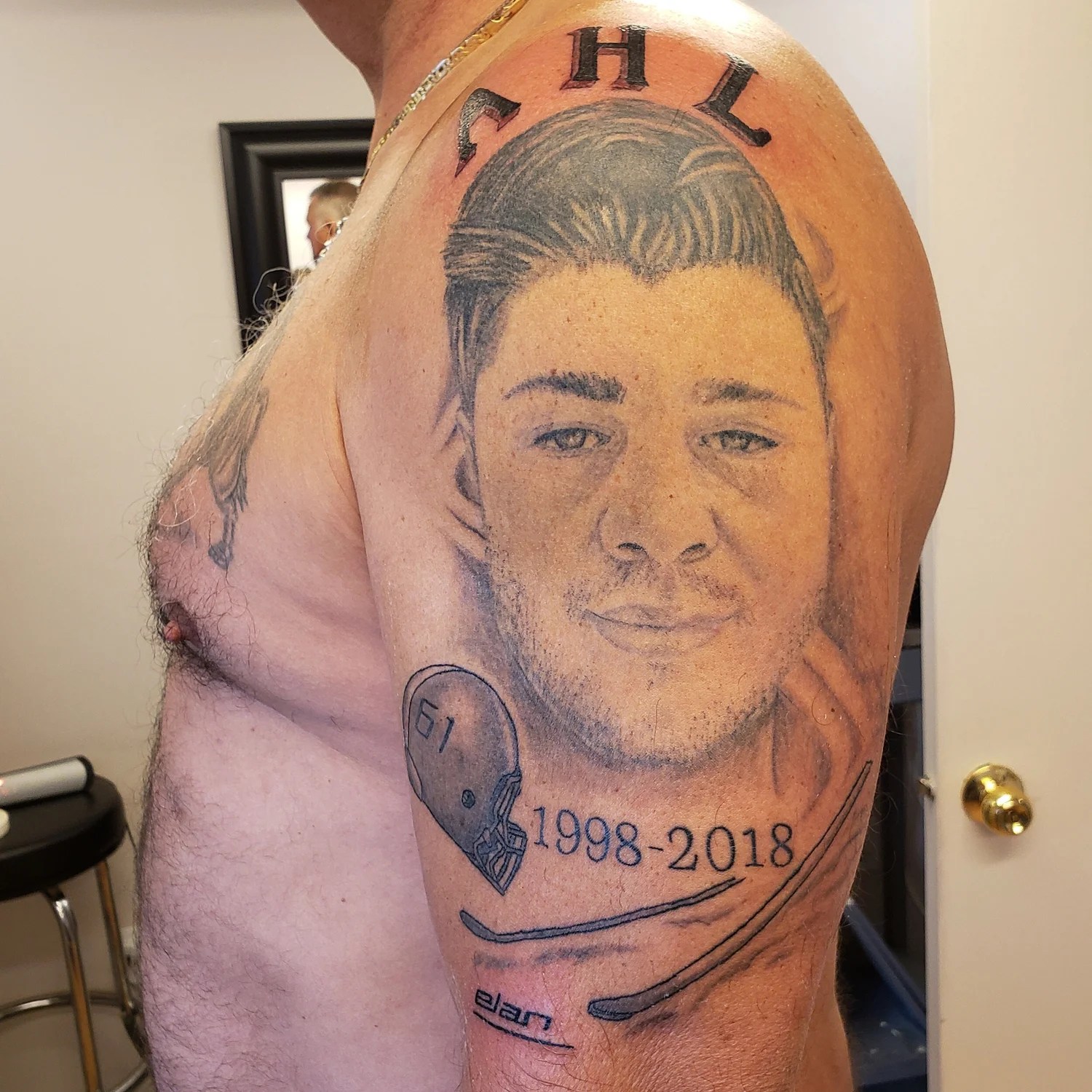
This tattoo is in memory of M’s son, AHL, who died in his bed by overdose on Sept. 21, 2018. AHL led a quiet life dedicated to sports until he turned 19, when he started working at a bar and going to rave parties. His parents had just moved him into his first apartment near the University of Montreal in mid-August, a month before his death. 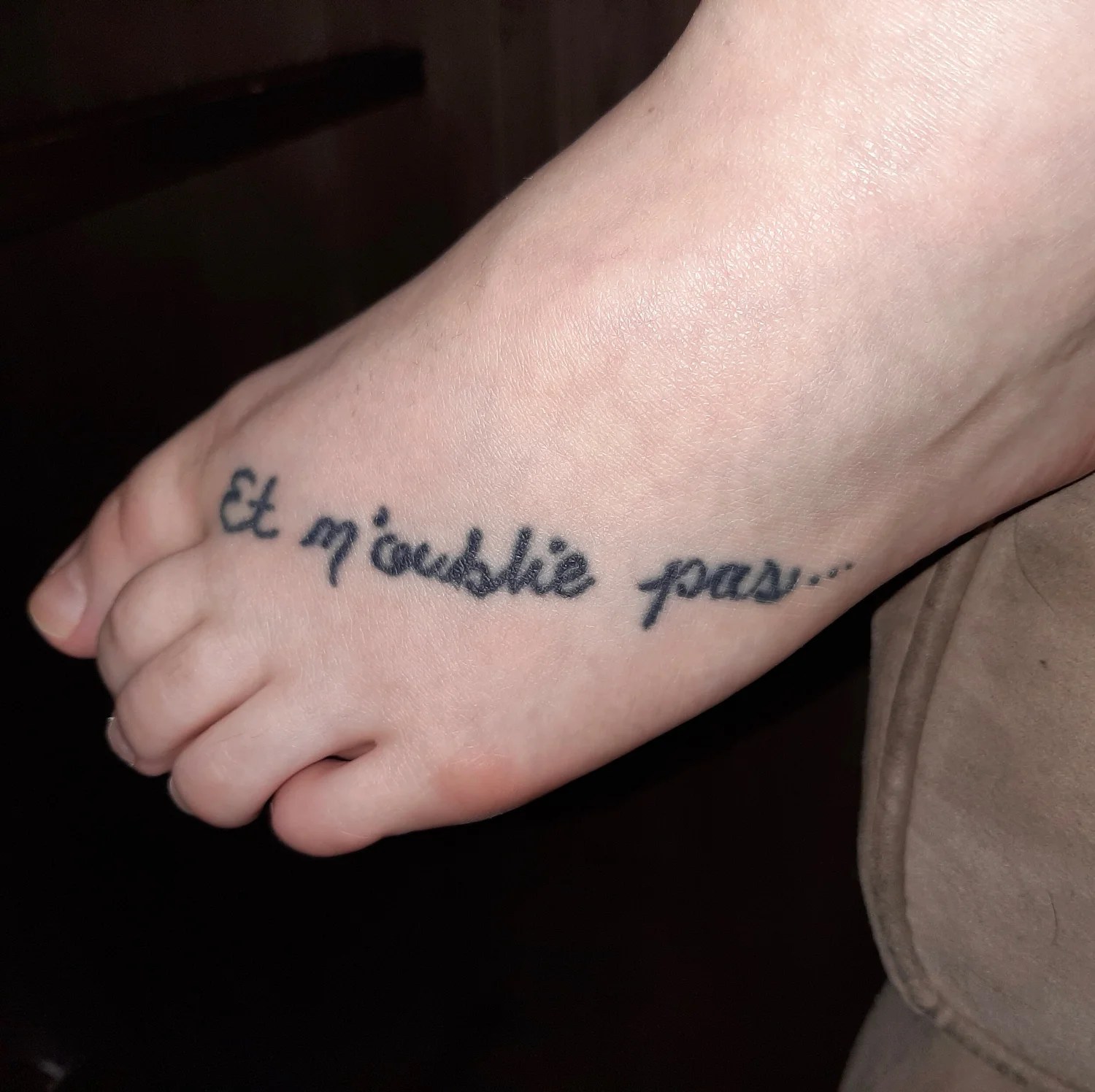
S’s maternal grandfather used to tell his grandkids “and don’t forget” (in French), to remind them that he loves them. This is a phrase that stayed with S her whole life, and also the last thing she said to him before he died. She got this tattoo, in her mom’s handwriting, on her left foot because it is linked to the heart and to pay tribute to her grandfather’s love of travel. With this tattoo, S’s grandfather now goes wherever S goes. 
At 20 weeks pregnant, L learned that her son’s heartbeat stopped, and she had to give birth to her dead son. Even though it was the hardest thing she ever had to do, she is happy, thinking of him living on in the body of a bird, watching her family everyday.
Reference
Warnick, A. & Toye, L. (2016). Memorial tattoos as connection. In D. Davidson (Ed.) The Tattoo Project: Commemorative Tattoos, Visual Culture, and the Digital Archive. (pp.134-135). Toronto, ON: Canadian Scholars Press.
Instagram: inkingthebond
 STORIES FROM THE SKIN